Hiring
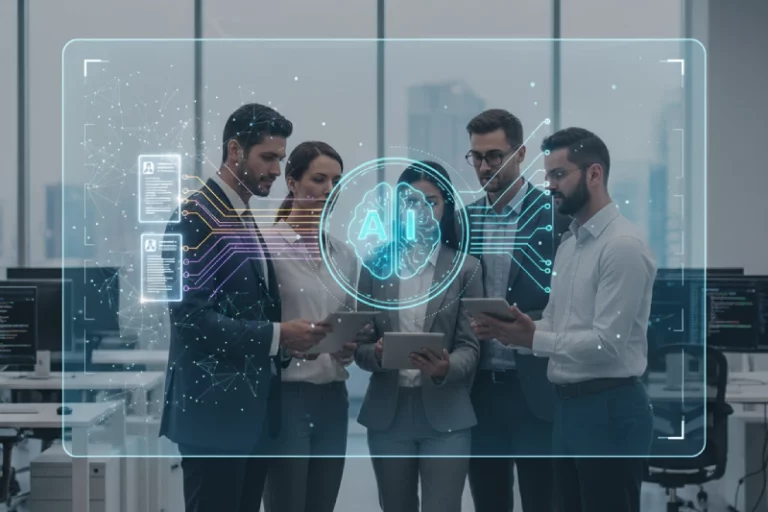
Artificial Intelligence (AI) isn’t just changing the way we live; it’s transforming how we work. From intelligent assistants such as Apple’s Siri to predictive algorithms that are beginning to shape our online browsing, artificial intelligence is at the heart of 21st-century life. But there’s a space where its impact is profound: tech hiring. For recruiters, HR leaders, and tech experts across India, AI is rewriting the rules of recruitment, enabling smarter, faster, fairer hiring.
From Resumes to Real Skills:
How Companies Are Finding the Best Job Candidates
Until recently, hiring was a guessing game based on intuition and untold hours of manual work. HR teams combed through thousands of resumes in an effort to marry words on paper with the promise behind them. Too often, decisions were made based on experience rather than ability, and biases, conscious or not, did their covert work.
Today, this narrative is changing. AI brings precision into recruitment. It deciphers not only what is written on a resume but also what truly matters. Using big data, machine learning, and natural language processing, AI enables recruiters to match the right skills with organisational culture and other technical requirements.
The AI-Enabled Recruitment Cycle: New Game in Town
- Resume Screening and Parsing
ATS powered by AI can scan thousands of applications in a matter of minutes. Unlike previous systems, which depended only on keyword matches, these platforms understand context. For instance, when a candidate says “TensorFlow” instead of “machine learning,” AIs understand the association. This little nuance will help ensure that talented experts don’t get filtered out because of the difference in language,” a significant consideration for India’s multi-lingual tech market.
- Automated Candidate Sourcing
Recruitment is no longer about who applies; now it’s about finding who fits. AI tools search social platforms, professional networks, and niche communities to find passive candidates who are a perfect fit but aren’t currently seeking employment. For companies trying to hire the best, the scale and accuracy of this are game-changers.
- Conversational AI: Transforming Candidate Experience
Chatbots and virtual assistants are becoming the first in line to respond. Open all day, every day, they respond to questions, set up interviews and even do some screening. This not only frees up recruiters’ time but also provides candidates with a more responsive and consistent experience. This is especially important in India, where a tough job market means candidates’ experience often determines employer brand perception.
- Skill-Based Assessments
Artificial intelligence-based testing platforms create tailored assessments based on a candidate’s exact job role, such as coding, data analysis or problem-solving. These assessments sweep away resume fluff and measure competence. And they democratise prospects by minimising dependence on pedigree and emphasising evidence of potency. For women professionals coming into tech after a career break, these systems open doors that more traditional filters often close.
- Predictive Analytics and Smart Hiring
Hiring has traditionally been reactive: a job opens up and an application follows. AI flips this dynamic. By analysing workforce trends, performance indicators, and hiring data, AI tools can predict who will be successful in the long term. This makes hiring a data-informed, proactive function rather than guesswork.
Above and Beyond Automation: The Strategic Impact of Human-Machine Collaboration
As AI manages the mundane, it raises the stature of recruiters. Unburdened by administrative work, they are free to focus on what machines can’t do: understanding people. HR’s job now is in relationship building, cultural alignment and mentoring. The result? Recruiters have transformed from task takers to strategic advisors who influence tangible business results.
New Jobs, New Skills: The AI Talent Surge
The AI revolution isn’t just transforming how companies hire; it is also changing who they hire. The demand for AI engineers, data scientists and automation experts is exploding. This growth, experts say, underscores a critical lesson for professionals: staying employable in the future is about agility. Upskilling, learning to work with AI rather than against it, is now a career strategy we all have to employ. Soft skills, creativity, adaptability, and emotional intelligence are assuming equal or greater importance.
Ethical AI and Fair Hiring: Everything starts from the determination of what is right or wrong, since that determination is then used as a guide to prepare our artificial intelligence systems to recognise good practices for fair hiring in favour of equity issues.
With awesome tech comes incredible responsibility. The increasing reliance on algorithmic hiring tools will raise difficult questions about bias, privacy and fairness. If AI is trained on biased data, that bias can emanate. So companies need to invest in ethical AI design: routine audits and transparency around data handling, with human oversight. Some countries, such as India, are already making moves in that direction with emerging data protection laws and responsible AI dialogues that influence policymaking.
Balancing Efficiency with Empathy
As much as AI speeds up the hiring process, it can’t replace human warmth. The picture of the future of hiring is in balance: algorithms to inform, humans to connect. AI guarantees accuracy and speed; recruiters, empathy and trust, together, they make a powerful combination.
AI and Indian IT Talent Pool
India’s tech industry is at the heart of this transformation. Backed by a large, dynamic talent pool and an evolving startup environment, India is at the forefront of the AI-led hiring revolution. Multinationals and Global Capability Centres (GCCs) are looking to India-based teams not just for cost arbitrage but also to innovate, become more agile, and gain deep domain expertise supported by AI.
Those who adapt to it through the use of tools, analytics and lifelong learning will future-proof themselves in the world’s largest tech talent market.
The SheWork Perspective: Precision Over Pace
In an industry where the ecosystem is constantly evolving, the most successful companies have realised that accuracy and process drive growth far more effectively than fast hires. At SheWork, this is at the core of how today’s teams are assembled.
Instead of racing to hire, we’re focused on smarter decisions supported by well-crafted assessments, sector alignment, and deeper vetting standards. SheWork enables companies to be more agile in hiring, rather than settling for the most convenient solution, by providing India’s top tech professionals through a transparent and skill-first process.
We prefer collaboration to competition: we plug into the hiring process and improve efficiency with pre-vetted talent pools and domain-specific insights. Our mission is simple: to build places where the most ambitious people can have a significant impact and global businesses operate without extreme effort.
The result is a hiring rhythm that’s not rushed but polished, built for long-term success, rather than short-lasting speed.
Conclusion: The Technocrats Take the Long View
Because the industry is lightning fast, it’s easy to feel that the faster you hire, the faster you grow. But as many tech companies have observed, sustainable success is not a function of speed but the quality of decisions.
A skill-first hiring strategy transforms hiring from a reactive process into a plan, one that scales teams, builds trust, and sets the stage for lasting innovation. And in a world where companies are locked in an old-fashioned race, the ones that take time to run around their competitors sometimes end up running ahead.
Ultimately, hiring is not about filling positions; it’s about building capability. And that starts any time we prioritise skill over speed.